
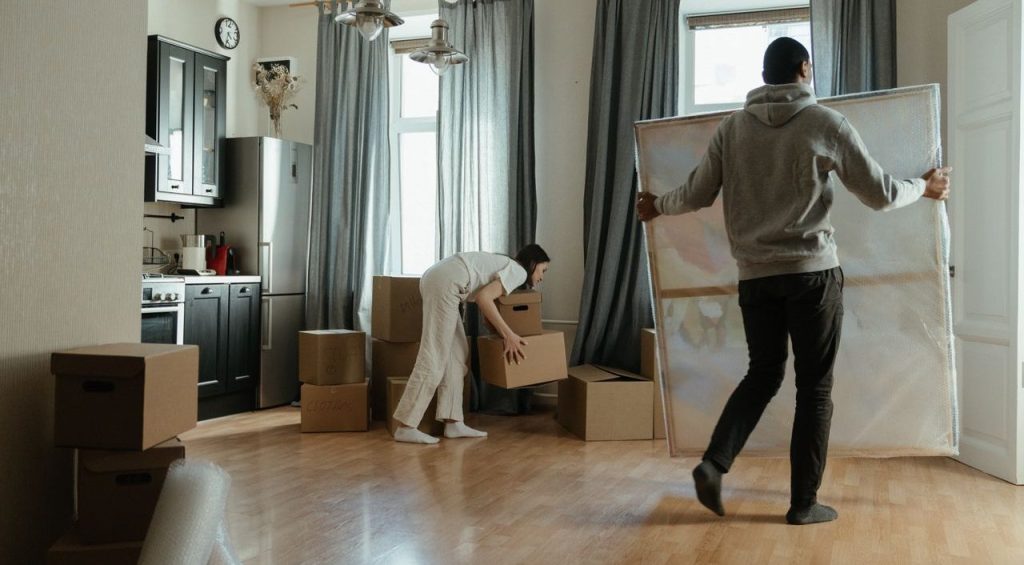
If you have just arrived in Munich – or you are packing your life into cardboard boxes to relocate – welcome. You have beer gardens along the Isar, effortless access to the Bavarian Alps, and a dynamic international hub waiting for you.
You are also likely facing Germany’s most competitive rite of passage: the Munich rental market.
Unless your relocation package includes a corporate flat for half a year, your initial weeks will probably involve an interim sublet (Zwischenmiete) in Glockenbachviertel, an Airbnb out in Giesing, or temporary corporate housing while you attend mass apartment viewings (Besichtigungstermine).
This is where the logistics get messy. Long-term German rentals are famously unfurnished – often lacking even a fitted kitchen (EBK / Einbauküche) or light fixtures. If your overseas container arrives before you sign a permanent lease, or if your temporary sublet cannot accommodate your furniture and sports gear, you face an immediate dilemma: where do you safely park your life in the interim?
Here is a practical breakdown of short-term storage options across Munich, what space realistically costs, and how to avoid overpaying in Germany’s most expensive city.
The Two Primary Storage Setups
Depending on whether you have a car, how often you need access, and whether you are willing to haul furniture yourself, Munich offers two main routes:
1. Traditional Walk-In Self-Storage
With classic self-storage, you rent a private, locked compartment within an access-controlled warehouse and secure it with your own padlock or a mobile app key.
- When it makes sense: You need flexible, recurring access. If you have stored seasonal ski equipment, hiking packs, cold-weather layers, or essential administrative documents you might need for city registration (KVR Anmeldung), a walk-in unit lets you swing by on an S-Bahn run or after work.
- The logistical reality: Driving a large van through Munich’s central rings – especially the Mittlerer Ring or narrow streets in Schwabing and Haidhausen – can be stressful during rush hour. If you choose this route, select a facility with direct S-Bahn or U-Bahn connectivity, or ensure it features a covered loading bay for rainy days.
2. Valet & On-Demand Storage (Pick-Up & Delivery)
Valet storage handles the logistics for you: a moving crew arrives at your flat, loads your packed boxes and wrapped furniture into a van, and transports them to a secure depot outside the city perimeter. Once you secure a permanent address, you schedule delivery directly to your new door.
- When it makes sense: You are storing multi-room furniture sets, bulk boxes, or mattresses that you do not need to access until lease-signing day.
- The logistical reality: It spares you the ordeal of renting a 3.5-tonne Sprinter van, navigating Munich’s tight residential side streets, and securing an official temporary no-parking zone (Halteverbotszone) from the city council.
What Does Storage Cost in Munich? (October 2026 Data)
Munich land values are among the highest in Central Europe, and storage rents reflect that premium. Local facilities currently cost roughly 22% to 27% more than the German national average.
Across Munich and its surrounding commuter belt, 17 storage providers currently operate 31 distinct facilities, offering 448 unique unit types.
The entry-level threshold starts at €18.00 per month for a micro-unit (roughly 1.00 m² / 1.00 m³). Here is the current market pricing breakdown across all standard categories:
| Storage Unit Type | Usable Floor Area | Lowest Price | Highest Price | Munich Average | German Average | Difference (€ / %) |
| Locker / Micro | 0 – 2 m² | €18.00 | €155.69 | €80.89 | €61.40 | +€19.49 (+24.1%) |
| Small Unit | 2 – 5 m² | €36.00 | €331.19 | €171.45 | €133.01 | +€38.44 (+22.4%) |
| Medium Unit | 5 – 10 m² | €62.50 | €503.06 | €291.81 | €212.37 | +€79.44 (+27.2%) |
| Large Unit | 10+ m² | €179.00 | €992.33 | €541.79 | €394.35 | +€147.44 (+27.2%) |
(Data reflects verified October 2026 rates for self-storage in Munich, provided by The Storage Scanner).
What Actually Fits in Each Category?
- Locker (0–2 m² / 1–5 m³): Holds 8 to 15 standard moving boxes, 2 large travel suitcases, folded sports equipment, or sensitive archive paperwork.
- Small Unit (2–5 m² / 5–12 m³): Accommodates the contents of a studio or WG room – including a disassembled double bed frame, a bicycle, a desk, and 15–20 stacked boxes.
- Medium Unit (5–10 m² / 12–25 m³): Fits the typical furnishings of a 1- to 2-bedroom flat, including sofas, dining tables, kitchen appliances, and 30+ moving cartons.
- Large Unit (10+ m² / 25–40+ m³): Designed for multi-room apartments, family homes, or long-term overseas relocation shipments.
Location Strategy: How to Cut Costs Around Munich
Because inner-city commercial real estate in districts like Maxvorstadt, Ludwigsvorstadt, or Bogenhausen commands top dollar, storage facilities located inside the city center charge premium square-metre rates.
If you don’t need weekly access to your items, placing them along Munich’s regional commuter corridors can save you a significant amount each month:
- Outer S-Bahn Outposts (North & West): Facilities along suburban rail lines toward Dachau, Neuaubing, or Karlsfeld often offer units at substantially lower rates than central hubs like Sendling or Moosach.
- The Airport Corridor (North-East): Storage hubs situated near Garching, Unterschleißheim, or along the S8/S1 toward Munich Airport frequently offer modern warehouse infrastructure and larger medium-to-large bays at competitive rates.
- South / Starnberg Belt Warning: Just as southern suburbs are prime residential real estate, industrial space south toward Pullach, Grünwald, or Starnberg remains scarce and expensive. Avoid southern suburban units if budget optimization is your primary goal.
3 Traps Expats Should Watch For
1. The 4-Week vs. Monthly Billing Cadence
Pay close attention to whether a provider quotes rates per month or per 4 weeks. Billing every 28 days results in 13 invoicing cycles per calendar year rather than 12. That seemingly small scheduling difference adds an entire extra month of rent to your balance sheet over a 12-month period.
2. Duplicating Contents Insurance
Most professional storage providers will ask you to purchase their in-house coverage (€10–€30/month) if you cannot prove external coverage. Before signing up, inspect your German household insurance policy (Hausratversicherung). Standard German policies usually include an Außenversicherung (off-premises extension) that covers items stored in an approved commercial warehouse for up to 3 to 6 months at no additional charge.
3. Paying for Floor Area Instead of Cubic Volume
Storage units in Munich generally feature clear ceiling heights between 2.70 and 3.20 metres. If you pack using uniform, stackable moving boxes (Umzugskartons) and stack to the ceiling, a 3 m² space will easily swallow the contents of what looks on paper like a 5 m² room. Never pay for unused vertical headroom.
Relocating to Bavaria already comes with significant friction – from language barriers to apartment deposits. Before committing to a storage contract, benchmark providers, verify access terms, and pick the location and billing cadence that aligns with your timeline.